
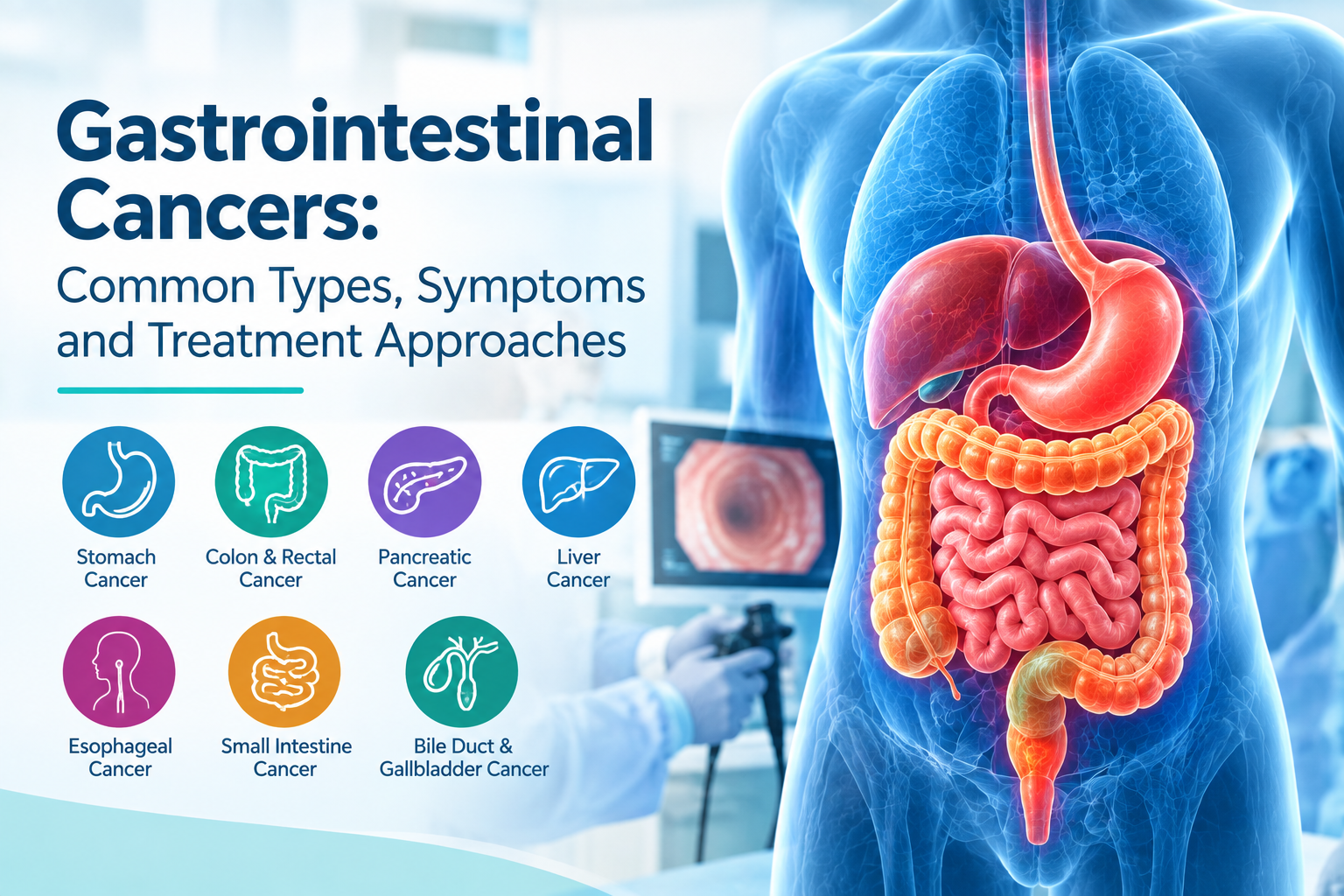
Gastrointestinal Cancers: Common Types, Symptoms and Treatment Approaches
Gastrointestinal cancers are cancers that develop within the digestive system, which includes the esophagus, stomach, small intestine, colon, rectum, liver, pancreas, and other related organs. Symptoms can vary considerably depending on where a tumor develops and how advanced it is. Early medical evaluation can help identify the cause of persistent digestive changes and support appropriate treatment planning. Gastro Oncology Dubai services provide specialist assessment for patients with suspected or confirmed gastrointestinal cancers. What Are Gastrointestinal Cancers? Gastrointestinal cancers develop when abnormal cells in the digestive tract or associated organs begin to grow uncontrollably. Some cancers can remain localized for a period, while others may spread to nearby lymph nodes or distant organs. Gastrointestinal cancer treatment depends on the cancer’s location, type, stage, molecular characteristics, and the patient’s overall health. Because digestive organs are closely connected, treatment may involve several medical specialties. Common Types of Gastrointestinal Cancer Different cancers can develop throughout the gastrointestinal system. Common types include: Cancers can also affect organs associated with digestion, including the liver, gallbladder, bile ducts, and pancreas. Each type has different risk factors, symptoms, diagnostic methods, and treatment approaches. Stomach Cancer Stomach cancer develops in the tissues of the stomach. Early disease may cause few noticeable symptoms, while more advanced disease can cause persistent digestive problems. Possible symptoms include indigestion, abdominal discomfort, nausea, reduced appetite, difficulty swallowing, unexplained weight loss, or feeling full after eating small amounts. Stomach cancer treatment may involve surgery, chemotherapy, targeted therapy, immunotherapy, or combinations of these treatments depending on the diagnosis and stage. Gastrointestinal Cancer Symptoms Gastrointestinal cancer symptoms can vary according to the affected organ. Some symptoms may also be caused by ulcers, infections, inflammatory conditions, or other non-cancerous digestive problems. Potential warning signs include: Persistent or worsening symptoms should be assessed by a qualified healthcare professional. How Are Gastrointestinal Cancers Diagnosed? Diagnosis begins with a medical history and physical examination. Depending on the symptoms, doctors may recommend blood tests, endoscopy, colonoscopy, ultrasound, CT scans, MRI, PET scans, or other investigations. A biopsy may be performed during an endoscopic procedure or through another appropriate technique. Laboratory examination of tissue can help establish the type of cancer. Additional pathology and molecular testing may provide information that helps guide treatment decisions. Accurate staging is also important for determining whether the disease is localized or has spread. Gastrointestinal Cancer Treatment Approaches Gastrointestinal cancer treatment is individualized according to the location and characteristics of the cancer. Treatment may involve surgery, chemotherapy, radiation therapy, targeted medicines, immunotherapy, or combinations of these approaches. Treatment approach Potential role Surgery Removes localized tumors or affected digestive tissues when appropriate Chemotherapy Uses medicines to destroy or control cancer cells Radiation therapy Uses focused radiation for selected gastrointestinal cancers Targeted therapy Acts on specific molecular characteristics in certain cancers Immunotherapy Helps the immune system recognize and attack cancer cells A multidisciplinary team may review imaging, pathology, laboratory results, and other clinical information before recommending a treatment plan. The Role of a GI Cancer Specialist Dubai A GI cancer specialist Dubai team can evaluate digestive symptoms and coordinate appropriate investigations. Depending on the suspected condition, care may involve gastroenterologists, gastrointestinal surgeons, medical oncologists, radiation oncologists, radiologists, and pathologists. This multidisciplinary approach can be particularly important for complex cancers involving the stomach, pancreas, liver, colon, rectum, or other digestive organs. Patients can discuss the purpose of each investigation, potential treatment options, expected side effects, and follow-up requirements with their healthcare team. Surgery for Gastrointestinal Cancer Surgery may be recommended when a gastrointestinal tumor can be removed safely. The specific operation depends on the tumor’s location and extent. For example, surgery for stomach cancer may involve removing part or all of the stomach, while colorectal tumors may require removal of a section of the colon or rectum. Some procedures can be performed using minimally invasive techniques in appropriately selected patients. Surgery is not suitable for every patient. Doctors consider cancer stage, overall health, tumor location, and other factors before recommending an operation. Importance of Early Evaluation Not every digestive symptom indicates cancer. However, persistent symptoms should not be ignored, particularly when they are accompanied by unexplained weight loss, bleeding, difficulty swallowing, or significant changes in bowel habits. Early evaluation can help identify the underlying cause and, when cancer is present, establish the diagnosis and stage so that treatment planning can begin. Follow-Up and Supportive Care Follow-up after treatment depends on the type and stage of cancer and the treatments received. Patients may require periodic examinations, blood tests, imaging, endoscopy, or other assessments. Supportive care can also help address nutrition, pain, fatigue, digestive changes, and treatment-related side effects. Nutritional support can be particularly relevant when gastrointestinal surgery or other treatments affect eating and digestion. Conclusion Gastrointestinal cancers can develop in different parts of the digestive system, including the esophagus, stomach, small intestine, colon, and rectum, as well as associated organs such as the pancreas and liver. Gastrointestinal cancer symptoms vary widely, so persistent or unexplained changes should be evaluated. Gastro Oncology Dubai services can provide specialist diagnosis and coordinated care. Gastrointestinal cancer treatment may include surgery, chemotherapy, radiation, targeted therapy, or immunotherapy depending on the cancer type and stage. For patients seeking specialist assessment, a GI cancer specialist Dubai team can help interpret diagnostic findings and discuss appropriate treatment options. Stomach cancer treatment is similarly individualized according to tumor characteristics and the patient’s overall health. Frequently Asked Questions 1. What are common gastrointestinal cancers? Common types include esophageal, stomach, small intestine, colorectal, liver, pancreatic, and bile duct cancers. 2. What are gastrointestinal cancer symptoms? Symptoms may include abdominal discomfort, weight loss, digestive changes, bleeding, appetite loss, or difficulty swallowing. 3. How are gastrointestinal cancers diagnosed? Diagnosis may involve endoscopy, colonoscopy, imaging, blood tests, and biopsy, followed by pathology and staging when needed. 4. What is stomach cancer treatment? Stomach cancer treatment may include surgery, chemotherapy, radiation, targeted therapy, or immunotherapy based on the cancer’s characteristics.
Tags: Gastro Oncology Dubai