
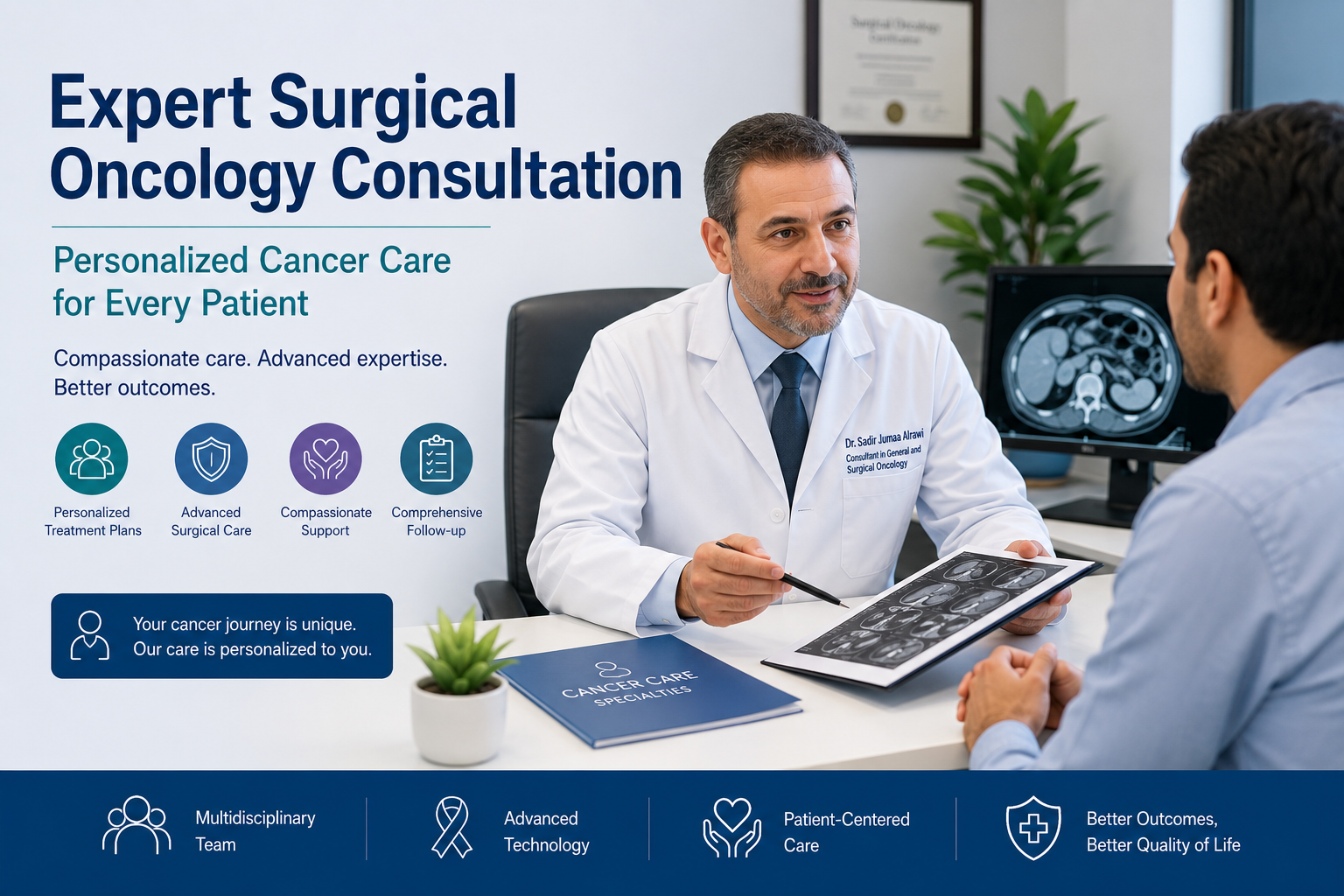
A cancer diagnosis can change many things in a person’s life. Patients and their families often have questions about treatment, surgery, recovery, and what to expect next. Having the opportunity to meet an experienced cancer specialist and discuss the condition in detail can make the treatment journey clearer and more manageable.
The featured video highlights a consultation setting with Dr. Sadir Jumaa Alrawi, Consultant in General and Surgical Oncology and Head & Neck Surgery. The video reflects an important part of cancer care: listening to patients, reviewing their medical information, discussing the available options, and developing a treatment plan that is appropriate for their individual condition.
At Cancer Care Specialties, the focus is on providing personalized cancer care supported by specialist knowledge, modern treatment approaches, and careful attention to each patient’s needs. The center provides services across several areas of oncology, including colorectal, gastro, gynecological, head and neck, thoracic, endocrine, breast, paediatric, hematology, and hepatobiliary pancreatic oncology.
Why a Specialist Consultation Matters
Every cancer case is different. Even when two patients have the same type of cancer, their treatment plans may not be the same. The stage of the disease, location of the tumor, overall health, previous treatments, and individual circumstances all need to be considered before making treatment decisions.
A specialist consultation gives patients the opportunity to understand their diagnosis and ask important questions. It also allows the doctor to carefully review available scans, pathology reports, previous medical records, and other information before recommending the next step.
A clear consultation can help answer questions such as:
- What type of cancer is involved?
- What is the current stage of the disease?
- Is surgery recommended?
- Are there other treatment options?
- Will additional tests be required?
- What can the patient expect during recovery?
Having these questions addressed by an experienced specialist can help patients make informed decisions about their care.
Personalized Treatment Planning
One of the most important aspects of modern cancer treatment is personalization. A treatment plan should be based on the patient’s specific condition rather than following a standard approach for everyone.
During a consultation, the medical team may assess diagnostic reports, imaging studies, biopsy results, previous treatment history, and the patient’s general health. Based on this information, the specialist can discuss suitable treatment options.
Depending on the type and stage of cancer, treatment may involve surgery, chemotherapy, radiation therapy, targeted treatment, immunotherapy, or a combination of different approaches.
The aim is to create a treatment pathway that addresses the cancer while also considering the patient’s overall well-being and quality of life.
The Role of Surgical Oncology
For many cancers, surgery can be an important part of treatment. Surgical oncology focuses on the surgical management of cancer and requires detailed knowledge of both the disease and the surrounding anatomy.
Dr. Sadir Jumaa Alrawi is listed by Cancer Care Specialties as a Consultant in General and Surgical Oncology with expertise that includes colorectal surgery, hepatobiliary and pancreatic surgery, foregut surgery, soft tissue and skin cancers, endocrine surgery, oncoplastic breast surgery, head and neck surgery, and complex abdominal and thoracic procedures.
The decision to perform surgery depends on several factors. The specialist first needs to determine whether surgery is suitable and, if so, what type of procedure would provide the best possible result.
In some cases, minimally invasive or laparoscopic techniques may be considered. These procedures use smaller incisions and can offer benefits such as reduced postoperative discomfort and a shorter recovery period for appropriate patients.
However, the choice between minimally invasive and open surgery depends entirely on the individual case.
Supporting Patients Through the Treatment Journey
Cancer care does not begin and end with an operation. Patients need support before treatment, during recovery, and throughout follow-up care.
Preoperative discussions can help patients understand how to prepare for surgery and what they may experience afterward. After treatment, follow-up appointments allow the medical team to monitor recovery and address any concerns.
Nutrition, pain management, physical recovery, emotional well-being, and regular medical reviews can all be important parts of comprehensive cancer care.
A supportive approach can help patients feel more comfortable asking questions and discussing concerns throughout their treatment.
The Value of a Second Opinion
When a patient receives a cancer diagnosis or a recommendation for major surgery, seeking a second opinion can sometimes provide additional clarity.
A second opinion does not necessarily mean changing the original treatment plan. Instead, it gives patients another opportunity to understand their diagnosis, review treatment options, and make a decision with greater confidence.
Cancer Care Specialties also highlights second opinion services as part of its approach to cancer care.
For patients who are uncertain about a recommended procedure or want to explore alternative approaches, speaking with another qualified specialist can be a valuable step.
Advanced Cancer Care With a Multidisciplinary Approach
Cancer treatment often requires more than one area of medical expertise. Depending on the diagnosis, patients may need input from surgical oncologists, medical oncologists, radiation specialists, radiologists, pathologists, nutrition professionals, and other healthcare providers.
A multidisciplinary approach brings different specialists together to consider the patient’s condition from multiple perspectives.
This can be particularly important for complex cancers where treatment may involve several stages. The goal is to coordinate care and ensure that treatment decisions are based on a complete understanding of the patient’s needs.
Cancer Care Specialties describes its approach as combining qualified specialists, modern medical infrastructure, personalized treatment, and comprehensive healthcare support.
Clear Communication Builds Confidence
Medical terminology can sometimes feel overwhelming, particularly after a cancer diagnosis. Patients deserve explanations that are clear, simple, and easy to understand.
A good consultation is not only about the doctor explaining the diagnosis. It is also about listening to the patient.
Patients should feel comfortable asking questions about treatment, possible side effects, recovery time, expected results, and any concerns they may have.
Open communication between patients, families, and doctors helps create trust and allows patients to participate actively in decisions about their treatment.
Taking the Next Step
The video offers a glimpse into the importance of specialist consultations in cancer care. From reviewing medical information to discussing treatment options and planning the next steps, every consultation is an opportunity to provide patients with greater understanding and reassurance.
Cancer treatment can be a challenging experience, but patients do not have to navigate it without guidance. Access to experienced specialists, appropriate diagnostic evaluation, personalized treatment planning, and continued support can make the journey more organized and informed.
At Cancer Care Specialties, the emphasis is on combining specialist expertise with patient-focused care. Whether a patient requires surgical oncology, a second opinion, cancer screening, or treatment for a specific type of cancer, seeking advice from an experienced specialist is an important first step.
Frequently Asked Questions
1. What happens during a surgical oncology consultation?
The doctor reviews the patient’s medical history, scans, pathology reports, previous treatments, and current condition. Treatment options and the possible need for surgery can then be discussed.
2. Is surgery always required for cancer?
No. The need for surgery depends on the type, location, and stage of cancer and the patient’s overall condition. Some patients may require other forms of treatment or a combination of therapies.
3. Why should I consider a second opinion?
A second opinion can help you better understand your diagnosis and treatment options, especially when major surgery or complex treatment is being considered.
4. What types of cancer can a surgical oncologist treat?
Surgical oncologists may manage several types of cancer, including colorectal, gastrointestinal, breast, endocrine, head and neck, soft tissue, hepatobiliary, pancreatic, and other cancers depending on their area of expertise.
5. How important is follow-up after cancer treatment?
Follow-up care is an important part of the treatment journey. It allows doctors to monitor recovery, manage concerns, and provide ongoing medical guidance based on the patient’s condition.