
Skin cancer is one of the most common cancers worldwide, but not all skin cancers are the same. In a recent educational video, Dr. Sadir Juma Alrawi discusses melanoma and explains why awareness, early detection, and timely treatment are essential.
While many people have moles or pigmented spots on their skin, it is important to understand that some changes can signal a more serious condition. Melanoma develops in the melanocytes, the cells responsible for producing skin pigment. Although it is less common than basal cell or squamous cell skin cancers, melanoma is considered the most aggressive type because it can spread to other parts of the body if left untreated.
How Melanoma Differs from Other Skin Cancers
Dr. Alrawi highlights that basal cell carcinoma and squamous cell carcinoma are generally less aggressive and often remain localized. Melanoma, however, behaves differently.
Because melanoma has a higher potential to spread through the lymphatic system and bloodstream, early diagnosis becomes critical. When detected in its early stages, treatment outcomes are significantly better and many patients can achieve excellent long-term results.
Pay Attention to Your Moles
One of the key messages from the video is the importance of monitoring your moles and skin changes.
Many melanomas begin as changes in an existing mole or as a new pigmented lesion. Any mole that looks different from others or begins to change over time deserves medical attention.
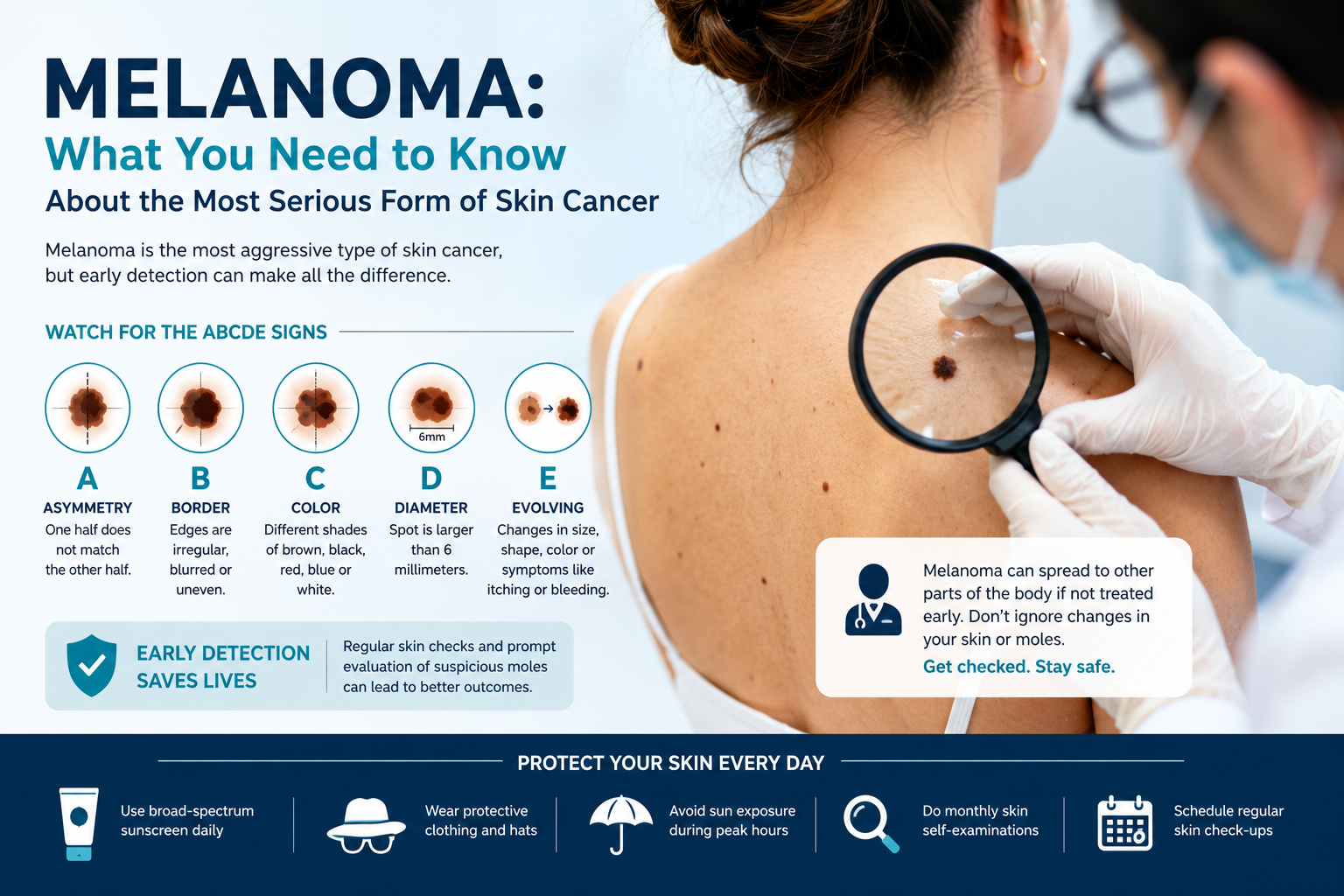
Doctors often recommend using the ABCDE rule when evaluating moles:
A – Asymmetry
One half of the mole does not match the other half.
B – Border
The edges become irregular, blurred, or uneven.
C – Color
Different shades of brown, black, red, blue, or white appear within the same lesion.
D – Diameter
The spot becomes larger than approximately 6 millimeters.
E – Evolving
The mole changes in size, shape, color, or symptoms such as itching or bleeding.
If any of these signs are present, a professional skin evaluation should be arranged as soon as possible.
Why Early Detection Matters
The success of melanoma treatment depends heavily on how early the cancer is discovered. When melanoma is confined to the skin, surgical removal can often be highly effective.
However, once the cancer spreads to nearby lymph nodes or distant organs, treatment becomes more complex. This is why regular skin examinations and prompt assessment of suspicious lesions are so important.
Individuals with fair skin, a history of excessive sun exposure, frequent sunburns, multiple moles, or a family history of melanoma may face a higher risk and should be particularly vigilant.
Modern Treatment Options for Melanoma
Advances in cancer care have transformed melanoma treatment over the past decade. Depending on the stage of the disease, treatment may include:
- Surgical removal of the melanoma
- Sentinel lymph node evaluation
- Immunotherapy
- Targeted therapies
- Comprehensive cancer monitoring and follow-up
A multidisciplinary approach allows specialists to create personalized treatment plans tailored to each patient’s condition.
Protecting Your Skin Every Day
Prevention remains one of the most effective ways to reduce melanoma risk. Simple protective measures include:
- Using broad-spectrum sunscreen regularly
- Wearing protective clothing and hats
- Avoiding excessive sun exposure during peak hours
- Performing monthly skin self-examinations
- Scheduling routine dermatological check-ups
Final Thoughts
The message shared by Dr. Sadir Juma Alrawi is clear: do not ignore changes in your skin or moles. Melanoma is a serious form of skin cancer, but early recognition and timely medical care can make a significant difference.
Being aware of your skin, seeking professional evaluation when something looks unusual, and maintaining regular health screenings are important steps toward protecting your long-term health. Early detection saves lives, and when it comes to melanoma, acting early can make all the difference.