
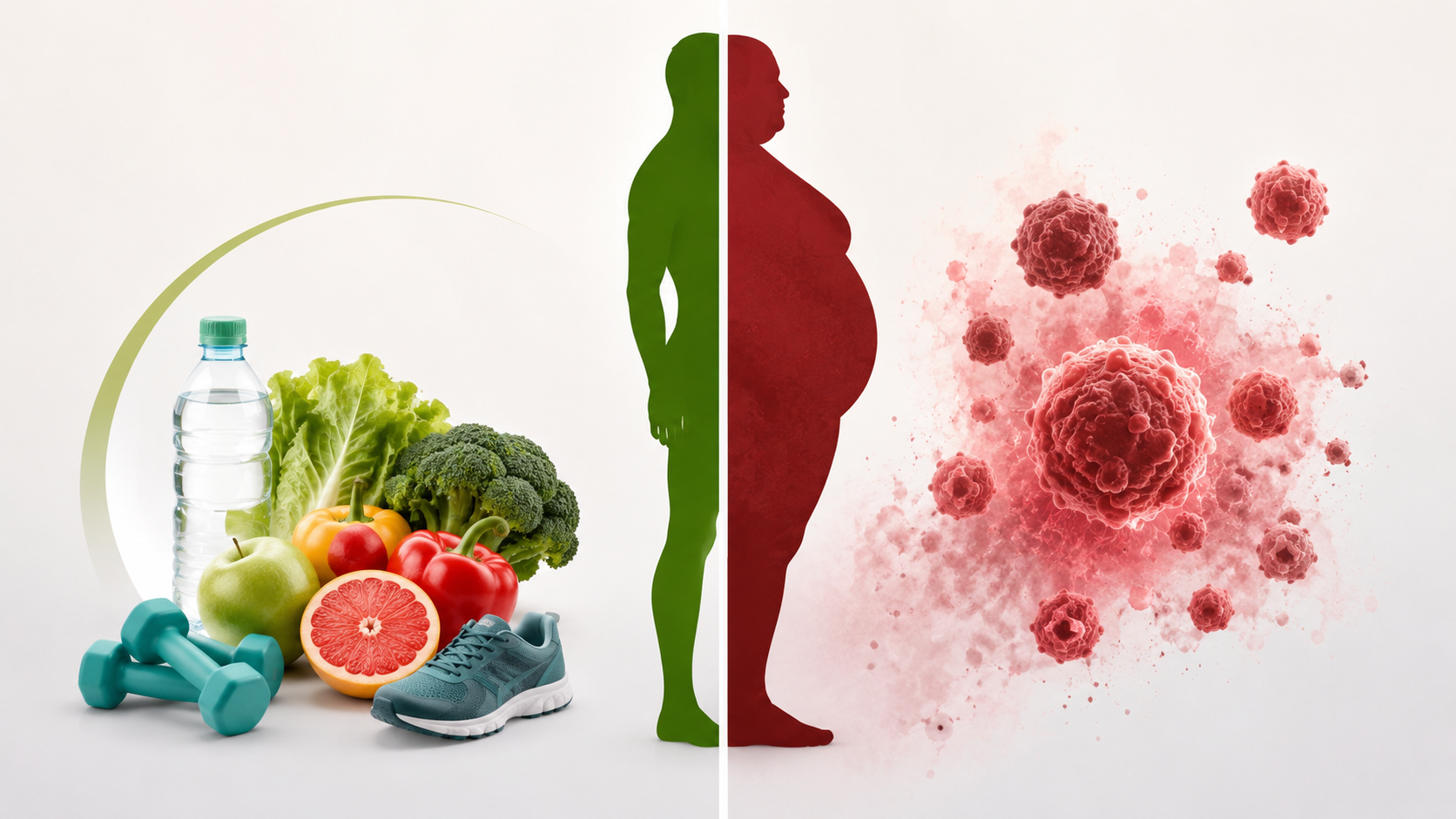
What is known about the relationship between obesity and cancer?
Obesity is associated with increased risks of the following cancer types, and possibly others as
well:
Esophagus
Pancreas
Colon and rectum
Breast (after menopause)
Endometrium (lining of the uterus)
Kidney
Thyroid
Gallbladder
One study, using NCI Surveillance, Epidemiology, and End Results (SEER) data, estimated that
in 2007 in the United States, about 34,000 new cases of cancer in men (4 percent) and 50,500
in women (7 percent) were due to obesity. The percentage of cases attributed to obesity varied
widely for different cancer types but was as high as 40 percent for some cancers, particularly
endometrial cancer and esophageal adenocarcinoma.
A projection of the future health and economic burden of obesity in 2030 estimated that
continuation of existing trends in obesity will lead to about 500,000 additional cases of cancer in
the United States by 2030. This analysis also found that if every adult reduced their BMI by 1
percent, which would be equivalent to a weight loss of roughly 1 kg (or 2.2 lbs) for an adult of
average weight, this would prevent the increase in the number of cancer cases and actually
result in the avoidance of about 100,000 new cases of cancer.
Several possible mechanisms have been suggested to explain the association of obesity with
increased risk of certain cancers:
Fat tissue produces excess amounts of estrogen, high levels of which have been associated
with the risk of breast, endometrial, and some other cancers.
Obese people often have increased levels of insulin and insulin-like growth factor-1 (IGF-1) in
their blood (a condition known as hyperinsulinemia or insulin resistance), which may promote
the development of certain tumors.
Fat cells produce hormones, called adipokines, that may stimulate or inhibit cell growth. For
example, leptin, which is more abundant in obese people, seems to promote cell proliferation,
whereas adiponectin, which is less abundant in obese people, may have antiproliferative
effects.
Other possible mechanisms include altered immune responses, effects on the nuclear factor
kappa beta system, and oxidative stress.
In Zahara hospital we are dedicated to our battle against cancer, patients who are overweight
and interested in counseling for weight loss solutions can arrange an appointment in our
Foregut & onco-bariatric clinic for risk assessment and counseling.